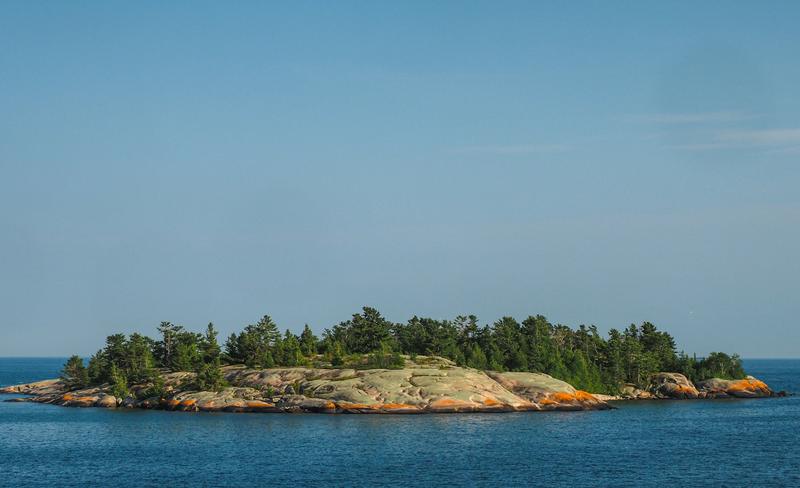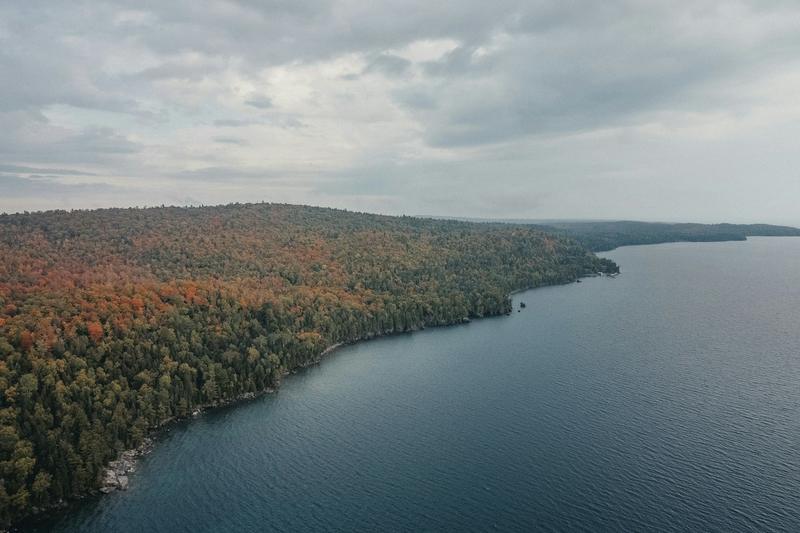
When the leaves are down and the boats are out of the water, a new crowd shows up on the St. Lawrence River. Buffleheads, goldeneye, and scaup are diving ducks. They feed by swimming underwater, and they like big, open water.
They're also some of the ducks hunters chase here in late fall. Here's how to tell them apart, on the water and in the air.
What is a diving duck?
There are two main groups of ducks. Puddle ducks, like mallards and black ducks, feed in shallow water by tipping their tails up. Diving ducks go all the way under to find food.
You can often tell the groups apart by how they move:
- Legs. A diver's legs sit far back on its body. That helps it swim underwater but makes it clumsy on land.
- Takeoff. A puddle duck can spring straight up off the water. Most divers have to run across the surface to get going.
- Where they sit. Divers spend more time farther from shore, out in open water.
- Food. Divers eat snails, mussels and other shellfish, insects, small fish, and water plants.
That's why the St. Lawrence suits them. It's big, deep, and open, with plenty of food on the bottom.
How do you identify a bufflehead?
The bufflehead is the little one. It's about 13 to 15 inches long and weighs about a pound. Hunters call it the "butterball."
- Drake (male): Bright white sides and a round black head with a big white patch on the back of it.
- Hen (female): Plain and grayish, with a neat white spot on the side of the head behind the eye.
- Flight: Fast, with quick wingbeats. Unlike most divers, a bufflehead takes off easily from the water.
- Sound: Mostly quiet. Drakes give a squeaky whistle and hens a soft, hoarse quack.
Buffleheads usually travel in small groups. Often the whole flock dives at once, then pops back up together. One odd fact: they nest in tree holes, often old woodpecker holes made by northern flickers.
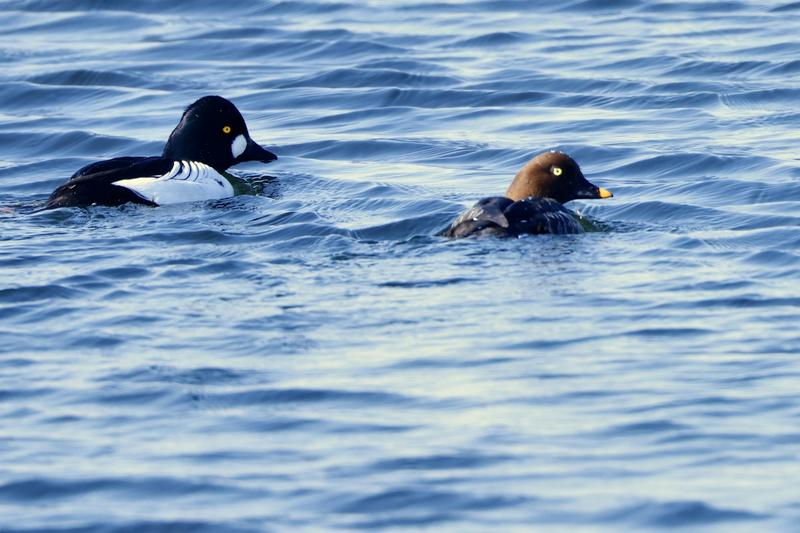
How do you identify a goldeneye?
The common goldeneye is bigger, about 17 to 19 inches and around 2 pounds. Hunters call it the "whistler" for the sound its wings make. You'll often hear a flock before you see it.
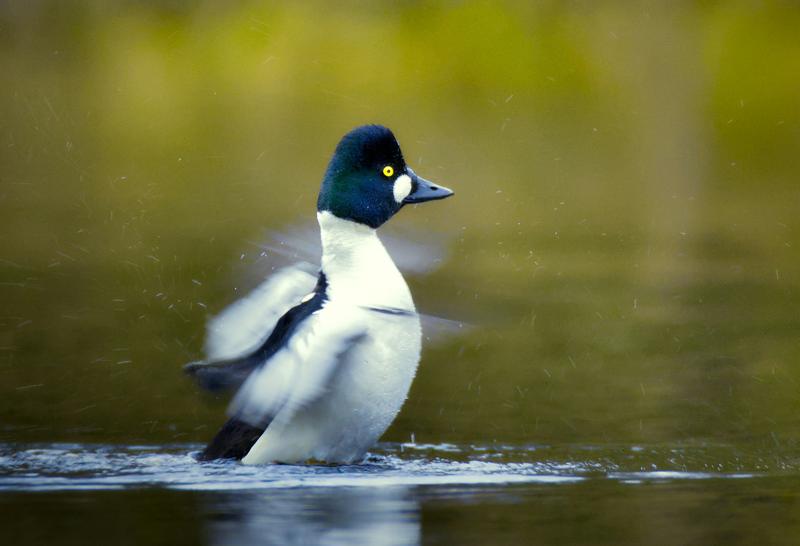
- Drake: Black head and back, bright white chest and sides, and a round white spot between the bill and the yellow eye.
- Hen: A chocolate-brown head on a gray body. Her black bill often has a yellow tip.
- Flight: Fast and direct, with that whistle.
- Sound: Drakes make a sharp, high call during courtship. Hens give a low quack.
Goldeneye feed by diving for shellfish, insects, and small fish. Like buffleheads, they often dive together, and they tend to keep to their own kind.
How do you identify a scaup (bluebill)?
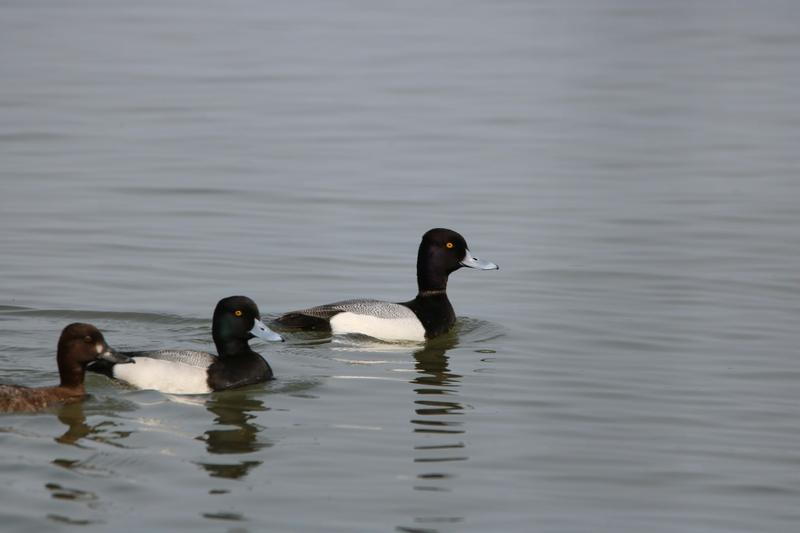
Scaup are the ducks locals call bluebills, for their pale blue bills. Some hunters call them broadbills. There are two kinds, the lesser scaup and the greater scaup, and they look almost the same. Both run about 16 to 18 inches long.
- Drake: Black at both ends and pale in the middle. The head is dark with a shine that can look purple or green, the chest and tail are black, and the back and sides are light gray and white.
- Hen: Brown, with a clear white patch at the base of the bill.
- Flight: Fast and direct, often in tight flocks.
- Sound: Seldom heard.
Telling lesser from greater scaup is hard, even for birders. Look at the shape of the head. A lesser scaup's head peaks toward the back. A greater scaup's head is rounder, with the high point toward the front. In flight, the white stripe on a greater scaup's wing runs farther out toward the tip. Greater scaup also tend to use bigger, more open water.
In winter, scaup can gather in huge rafts of hundreds or thousands of birds. A big raft of bluebills on open water is a classic late-fall sight.
Quick ID chart
| Duck | Size | Drake | Hen | Clue in the air |
|---|---|---|---|---|
| Bufflehead | 13 to 15 in., about 1 lb. | Big white patch on a dark head | White cheek spot | Small, fast, quick takeoff |
| Common goldeneye | 17 to 19 in., about 2 lb. | Round white spot by a yellow eye | Brown head, gray body | Whistling wings |
| Scaup (bluebill) | 16 to 18 in. | Black ends, pale middle, blue bill | White patch at bill base | Tight, fast flocks |
When do diving ducks show up on the St. Lawrence?
All three are late migrants. They tend to move south later in the fall than many puddle ducks. That means the diving duck action on the river often picks up as the weather turns cold and gray. Goldeneye spend the winter on big rivers and lakes, so some stay as long as there's open water.
Exact timing changes from year to year with the weather up north. A cold snap can push birds down fast.
How are diving ducks hunted?
Diving ducks are usually hunted over decoys on open water. Hunters set out a spread of decoys, then wait in a boat or a blind for birds to come in. Since divers like to sit out away from shore, a boat is often the way to reach them.
Laurentian Tours runs guided waterfowl hunts on the river for up to 4 hunters. Ducks include bluebills, goldeneye, buffleheads, mallards, and black ducks, plus Canada geese. You hunt from a boat or a blind, depending on the day, and the decoys are supplied. Dogs are welcome, and only non-toxic shot is allowed.
You'll need a New York hunting license, HIP registration, and a federal duck stamp if you're 16 or older. Seasons and limits change every year, and some species have their own limits, so check the current rules with NYSDEC before you go. Want more on this river in the fall? Read about fall musky fishing on the St. Lawrence.
For more on each bird, the Audubon bufflehead guide (opens in a new tab), the Audubon lesser scaup guide (opens in a new tab), and the Pennsylvania Game Commission's page on diving ducks (opens in a new tab) are good places to start.
Frequently asked questions
What is the smallest diving duck on the St. Lawrence?
The bufflehead. It's about 13 to 15 inches long and weighs about a pound, which is why hunters call it the butterball.
Why are goldeneye called whistlers?
Their wings make a whistling sound in flight. You can often hear a flock of goldeneye coming before you see it.
Is a bluebill the same as a scaup?
Yes. Bluebill is a nickname for scaup, from their pale blue bills. Some hunters also call them broadbills.
How do you tell a diving duck from a puddle duck?
Watch it take off. Most diving ducks run across the water to get airborne, while puddle ducks spring straight up.
Can I hunt diving ducks with Laurentian Tours?
Yes. Guided hunts target bluebills, goldeneye, buffleheads, and other ducks, for up to 4 hunters. Call or text Captain Richard Drake at 315-836-5798 to plan a date.
Ready to plan a duck or goose hunt? See the trip details and prices, or call or text Captain Richard at 315-836-5798.